

All about our saddles
Together with your handlebars and pedals, your saddle is one of the few contact points between you and your bike. Most of your weight is carried through your saddle. Your saddle, therefore, has a major impact on the comfort of your ride and your bike in general.
A good saddle is personal, but integral for a positive experience on your bike. Even though it is important to find a saddle that is comfortable for you, we can help you out by explaining a bit more about what the critical aspects of a saddle are and what to look out for when purchasing a new saddle. This buyer's guide is a great first step towards hours and hours of comfort on your bike!

How is your bike fit?
Saddle pain is a common problem among cyclists. It can be caused by having the wrong type of saddle on your bike, but it is often also the result of a poor bike fit. When you change your position on your bike, it will have a great effect on the comfort of your saddle and the weight distribution on your bike.
So, before you start your search for a new saddle, it is important to check your bike fit. Is the whole bike fitted to your body? To check the bike fit, you need professional help. Check with a nearby bicycle shop if you have opportunities to do a bike fit.
Comfort and its perks
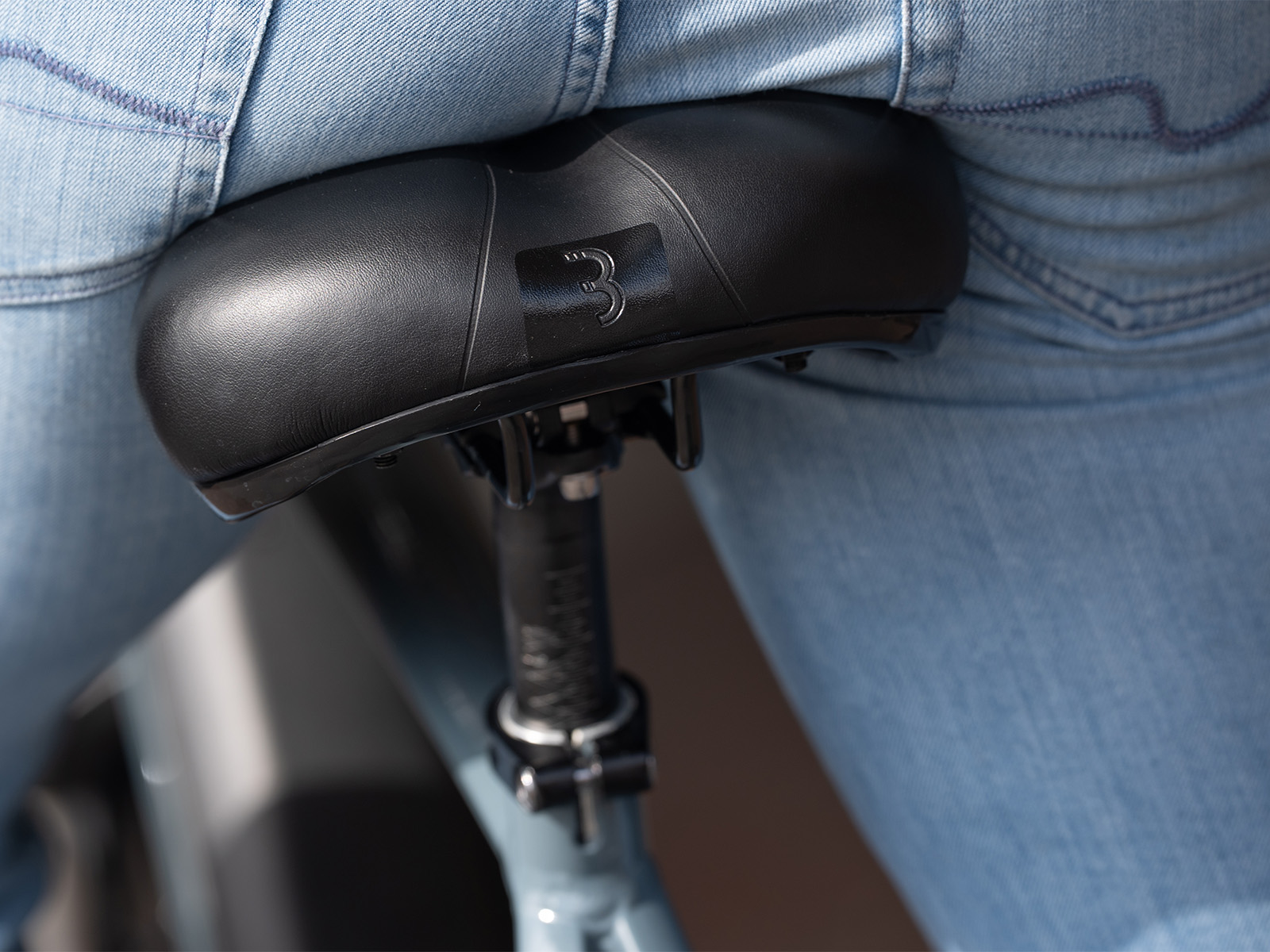
When you still feel discomfort after a bike fit, it is most likely caused by not having the right saddle on your bike. A saddle is very personal: what fits you perfectly and feels very comfortable for you can be horrible for somebody else. Besides, different types of bikes require different types of saddles. Having the right saddle for you and your bike will increase the fun of bike riding massively!
Softer is not always better
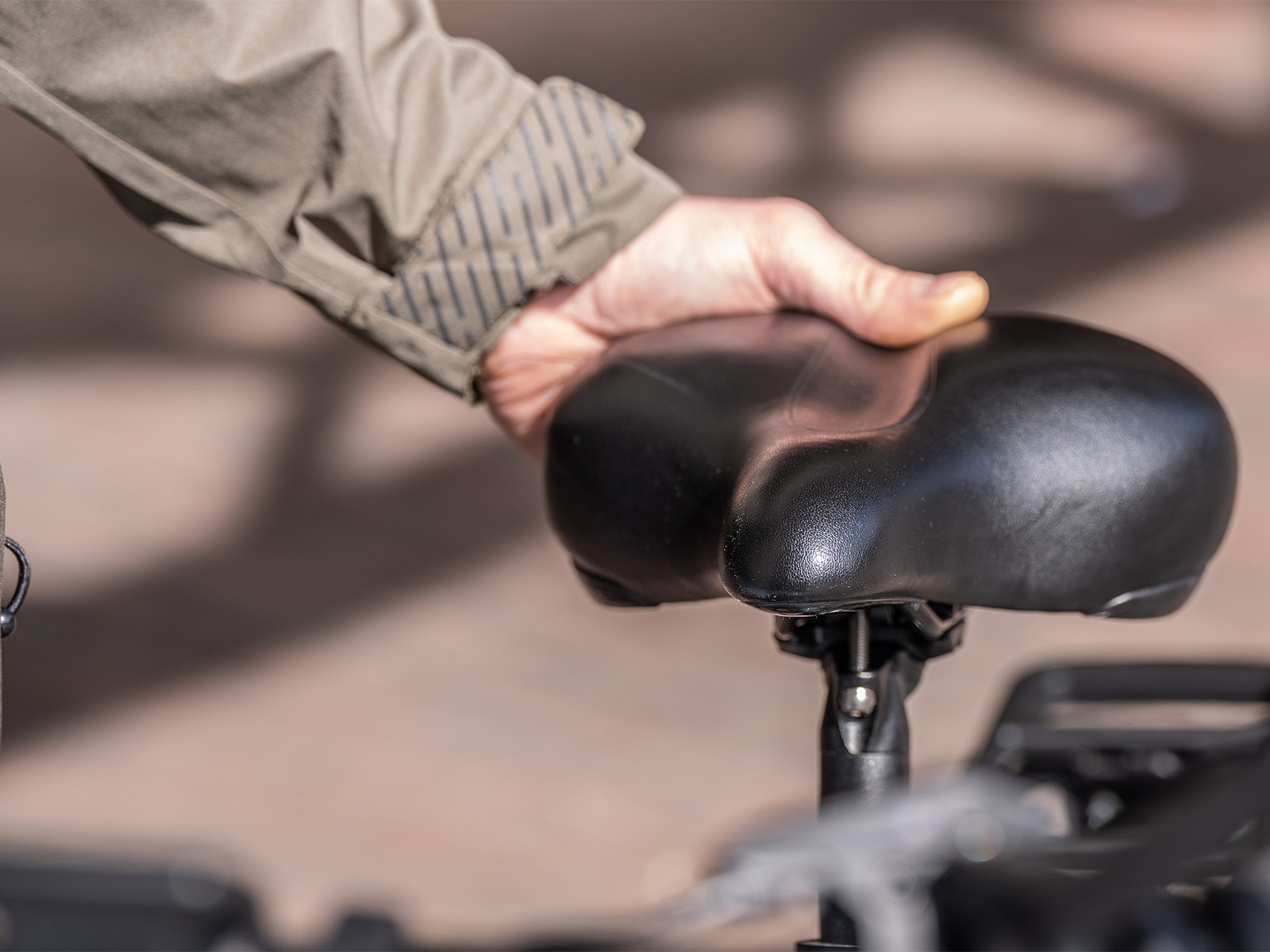
When a saddle is uncomfortable for you, the first thought is often: 'I need a softer saddle'. Even though this seems like a good solution. It will probably not solve the discomfort. A softer saddle can cover up some of the discomfort, but eventually it will come out. In fact, a saddle that is too soft, but not the right shape will only increase the discomfort.
The density of the saddle will squeeze veins together which will influence the bloodflow in your soft tissue. This can cause strain and simply a sore bum. A better idea is to look for a saddle that matches your anatomy this way your weight is evenly distributed over the saddle and does not cause any extreme pressure points. A saddle that matches your anatomy can be very hard and still be very comfortable without any nasty pressure points or strains. In the rest of this buyer's guide we will explain further how you can determine what saddle will suit you.
Cycling position
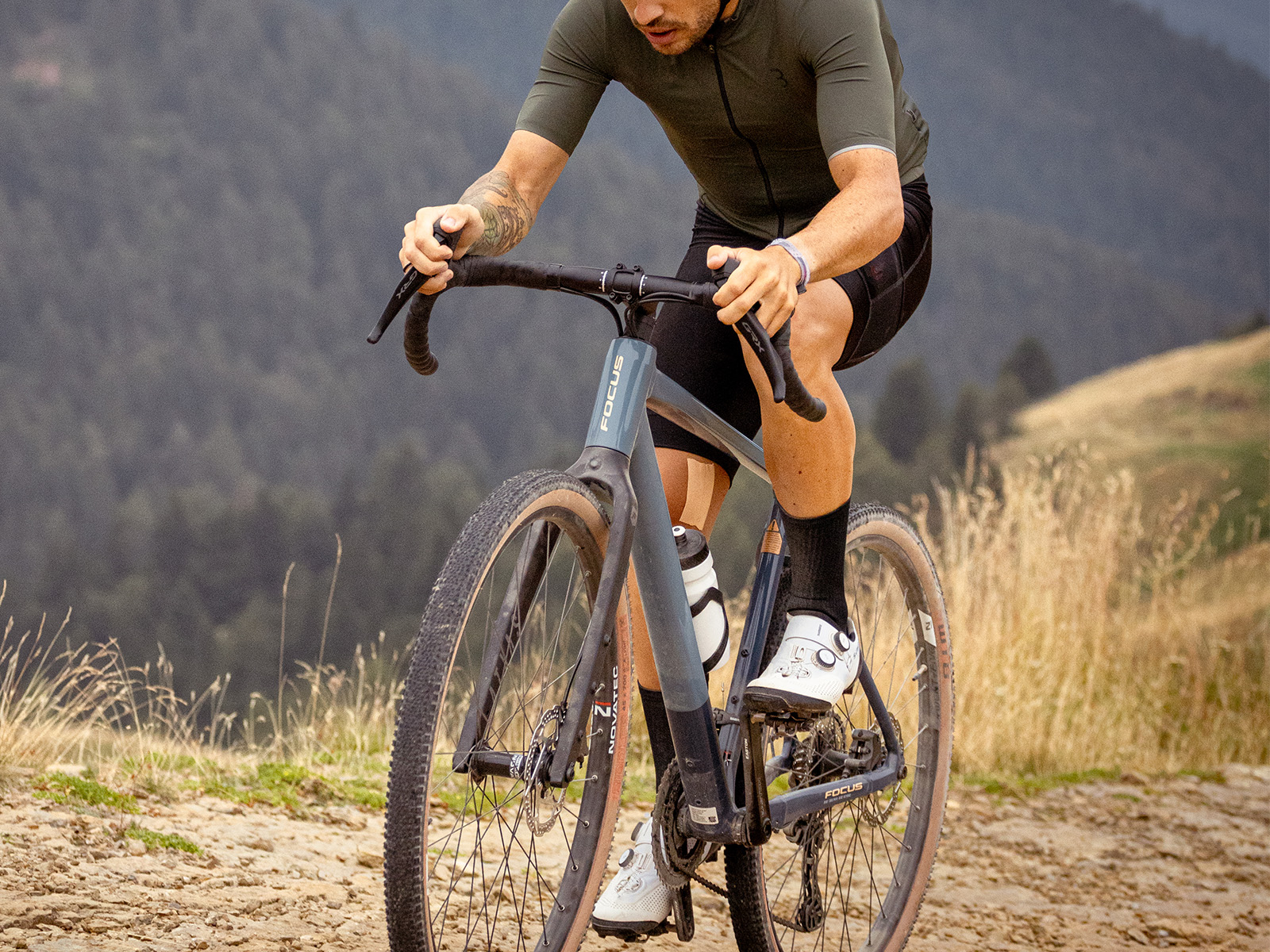
One of the major aspects that determine what saddle would fit you best is the position you have on your bike. Your weight is mostly divided between your handlebar and your saddle. Your position on the bike determines the proportion of how your weight is divided.
For example; when riding on an urban bike with your core almost straight up (like you would sit on a normal chair) almost all your weight is on your saddle, and only a very small portion is leaning on your handlebar. On the other hand, if you are riding a racebike with an extreme forward and aerodynamic position, a much bigger portion of your weight will lean on your handlebar, and thus not on your saddle.
Besides that, the position of your upper body determines the rotation of your hips and lower back on the saddle. When leaning forward, your hips will also be rotated further forward and your sit bones will come up and stick out further, which means that the sit bones are in more direct contact with the saddle. More reason to make sure your saddle fits you properly.
As the position on your bike is so important in regards to your saddle fit, we categorize all our saddles in 5 different positions explained below.
Upright saddles are designed to be used on an E-bike or city bike. The upward position of your bike is supported with these saddles, allowing your back to relax and enjoy the beauty of your ride. These saddles are wide and have a thick base. They are durable and waterproof to protect you against the elements. Depending on the series, it is built out of different types and layers of foams.
When you ride for fun and have all the time in the world, you need a relaxed position on your bike to enjoy every pedal stroke. Also, because you want to use your bike to tour and discover the paths around the city. Our saddles in the relaxed category will give you the comfort that you need. Built out of different types and layers of foams.
As an active rider, you need an active position on your bike to support your riding style. In that case, we have our active saddles range as a perfect fit for your needs. Designed especially for the more active rider with a relief channel or even an anatomic cut-out. To make your rides as comfortable as possible.
Sportive saddles are perfect for people riding in a sportive position. This position is mostly used for touring and riding long distances on a road bike or MTB. The more forward position brings your sitbones further to the outside. It is therefore even more important that you choose a saddle that fits you right.
The competitive saddles are especially designed for riders who want to be fast. These saddles are perfect for a competitive position, which is needed in a race or training ride. These saddles support your aerodynamic position on your bike and take the pressure off your lower back through the curved tail design
Width of your saddle
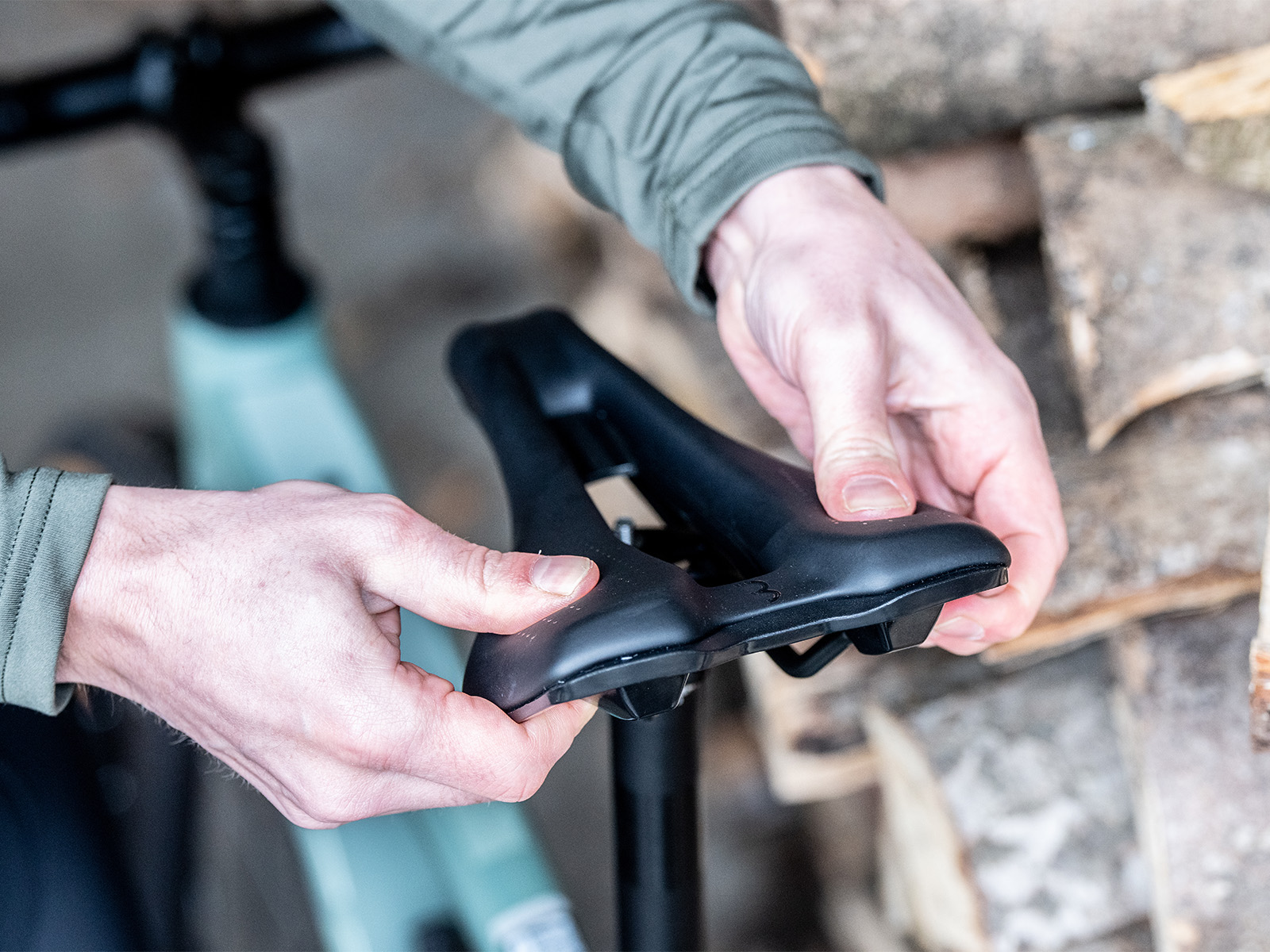
As you may have already seen, most of our saddles are available in different sizes. When selecting the best saddle for your rides, pay extra close attention to this. The size of a saddle represents the width of the saddle and is an integral part of your comfort on your bike rides. Read before you are going to choose a saddle just on gut feeling. The information here.
The width of your saddle has not much to do with how big your hips are. Your sit bones are crucial when it comes to comfort on a saddle. Sit bones are the two pointy ends underneath your hips. As the name suggests, they are the bones where you sit.
When buying a saddle, it is important that these sit bones are supported in the right way and in the right position on your saddle. If your saddle is too narrow, the sit bones are on the outside edge of your saddle. Which pulls them apart and can cause discomfort. When your saddle is too wide, the sit bones are positioned too far to the middle of the saddle, which also causes discomfort. To sit comfortably on your saddle, your sit bones must be well supported. The distance between these two bones is different for everyone. The best way to make sure you have the right width is to go into your local bike shop, which will have a special measuring tool to measure the width of your sit bones.
Anatomic channel
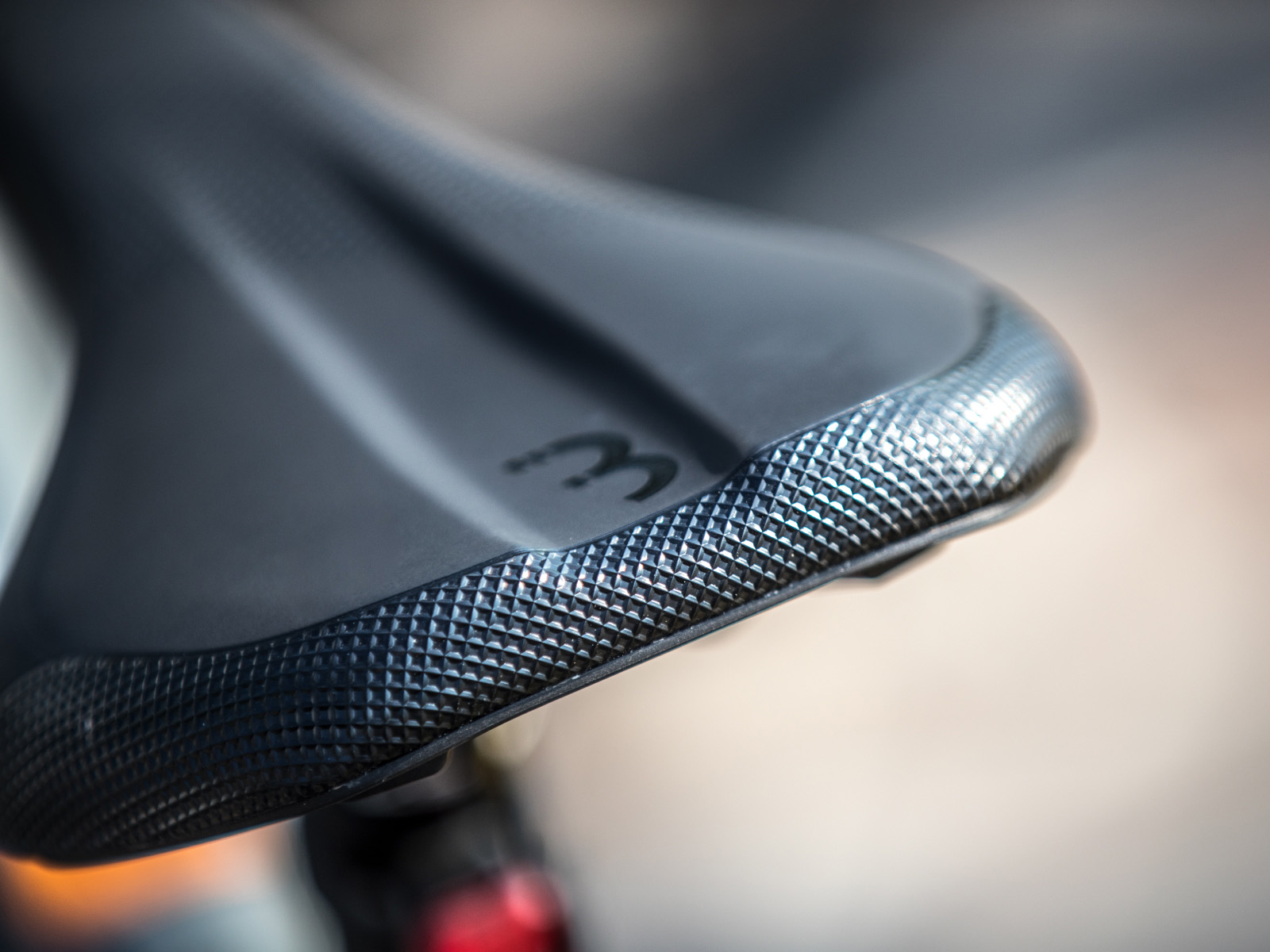
The last thing you want during a bike ride is an uncomfortable experience after a fair bit of your ride. If a saddle seems to fit alright in the first place, but causes you discomfort after a while. This is most likely to do with the blood flow. If your blood flow is obstructed by a wrongly shaped saddle, this can cause soreness and strain.
To avoid this, all our saddles have an integrated relief channel. Some even have a relief hole to take the pressure off completely. It keeps your sensitive parts free from pressure and your blood circulation intact. Without this channel in your saddle, it will cause pain and trouble in this area of the body. A cut-out divides the pressure evenly over the contact area. You will feel the comfort difference.
Materials
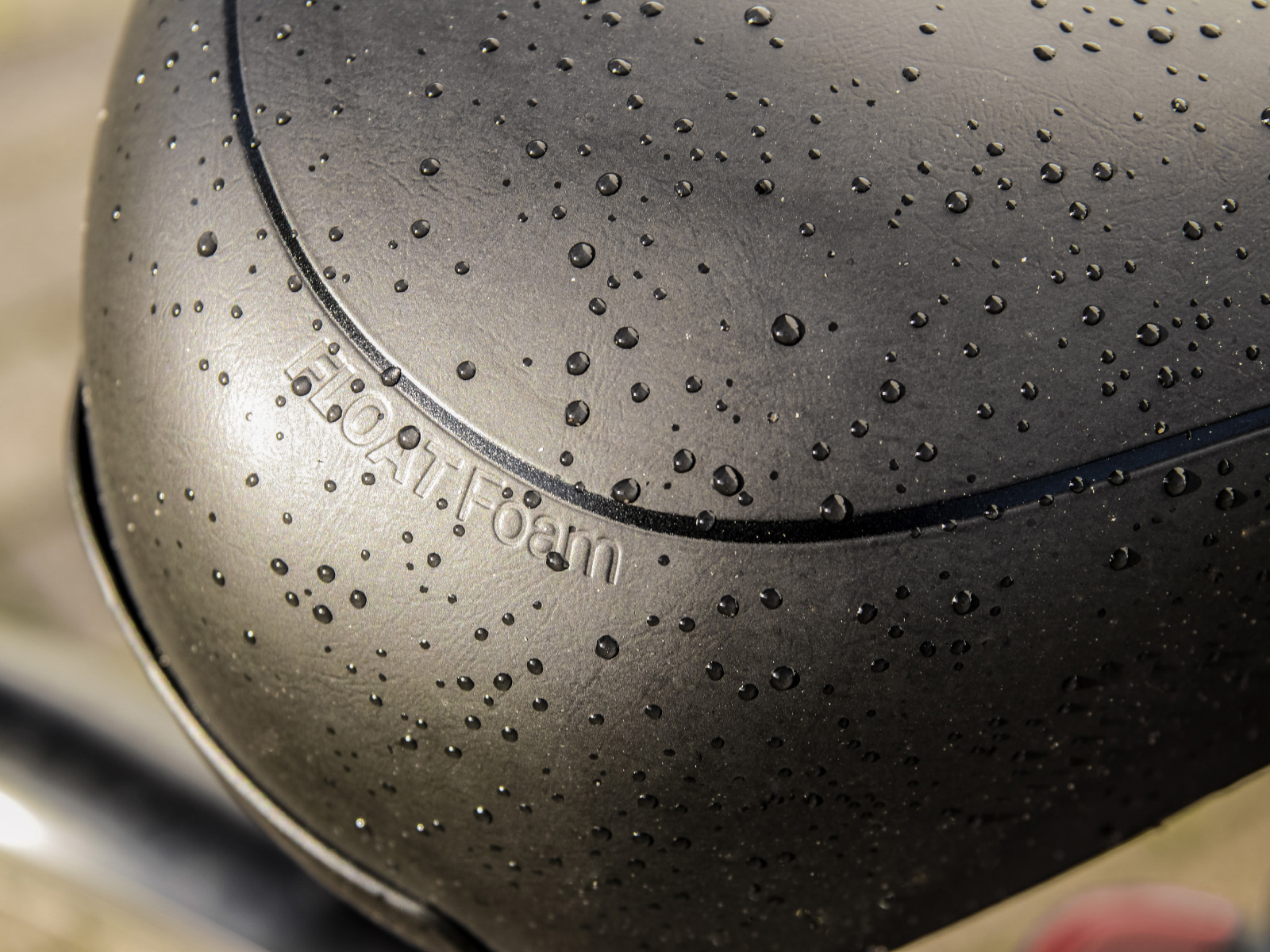
When you have finally found the right saddle, you want it to last forever! To make sure you can enjoy your saddle for a long, long time, we use high-end, durable materials that will last. We use different materials for our saddles. All these materials have their benefits and are used in the right places to create the best saddles. Below, we will explain a bit more about the materials that we use for our saddles.
Triple density foam is a combination of high-density EVA + moderate density PU and a soft Memory foam top layer this combination provides the most comfortable saddles.
PP, also known as polypropylene, is a thermoplastic polymer used to make our saddle shells. This ensures the durability and strength of our saddles.
Also know as PU or polyurethane is a foam used as a material to fill some of our saddles and provide a comfortable ride.
Leather is used to make the outside of our saddles. Leather is easy to clean, durable and waterproof which provides the perfect saddle lining material for some of our high-end saddles.
Search for the perfect saddle
And with that all said, you are ready to start your journey to many comfortable rides on a saddle that fits you like a glove. Keep in mind that a saddle is a very personal thing. Try some different saddles out or you can and ask your local bike shop for advice on your specific situation. Make sure you got the right type of saddle for your riding style, and the right width for your body. If you finally find one, we want to wish you many comfortable hours on it!