

All about our bottom brackets
The bottom bracket is one of the most essential parts of your bike. It is the often forgotten heart of your bike. It makes sure that all your power is converted into speed. This buyer's guide gives you information about what a bottom bracket actually is, the different types of bottom brackets and which one you need for your bike, and how to maintain your bottom bracket to stay smooth every day!
What is a bottom bracket?
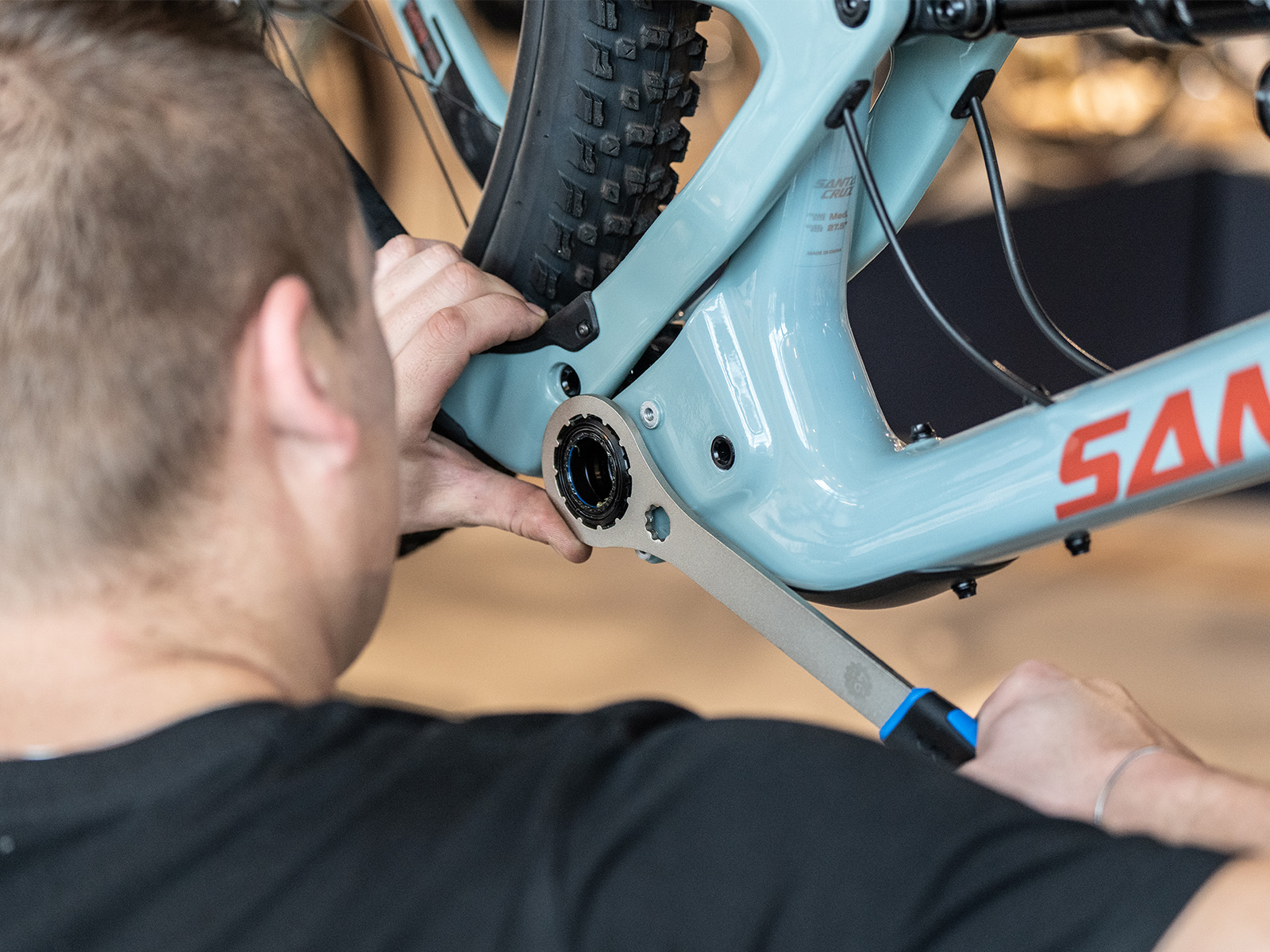
As the name suggests, the bottom bracket is located at the bottom of your bike. It is the part of the drivetrain where your cranks are connected through an axle. This axle is surrounded by two bearings that are essential to keep your pedals spinning smoothly. The bearings can either be pressed directly into the frame or be placed in cups that are threaded or pressed. Different crank axle types make it even more complicated, which results in many variables and thus many bottom bracket types.
Finding the right bottom bracket for your bike can be quite the task, but this buyer's guide will lead you through the steps to make sure you buy the right bottom brackets for your bike. We have done our best to keep our bottom bracket assortment clear and neat. With the many bottom bracket standards that exist nowadays, that can be quite difficult. Our bottom bracket range covers the most common bottom bracket standards while we don't get lost in the extremely complex world of bottom brackets.
What does a bottom bracket consists of?
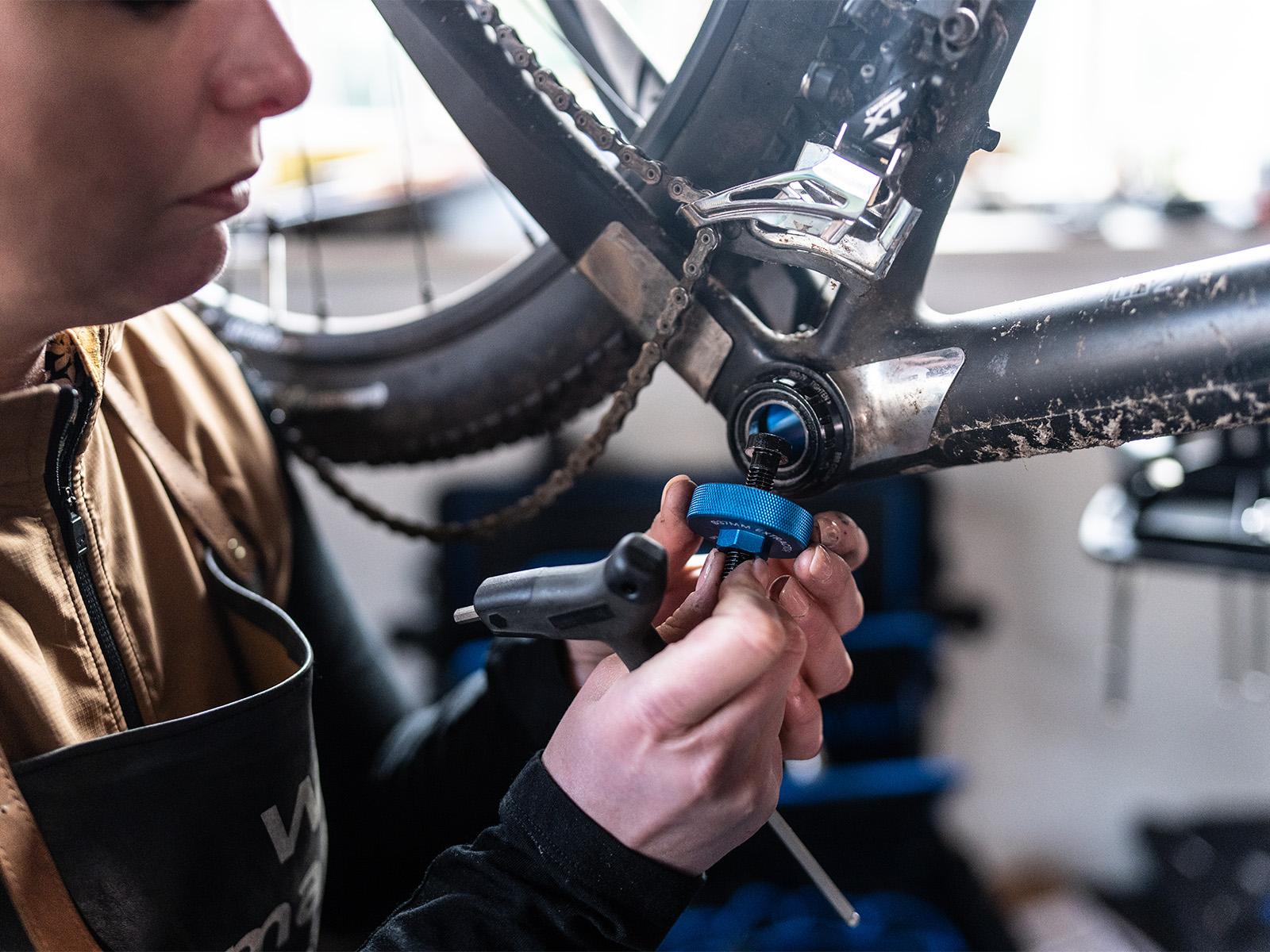
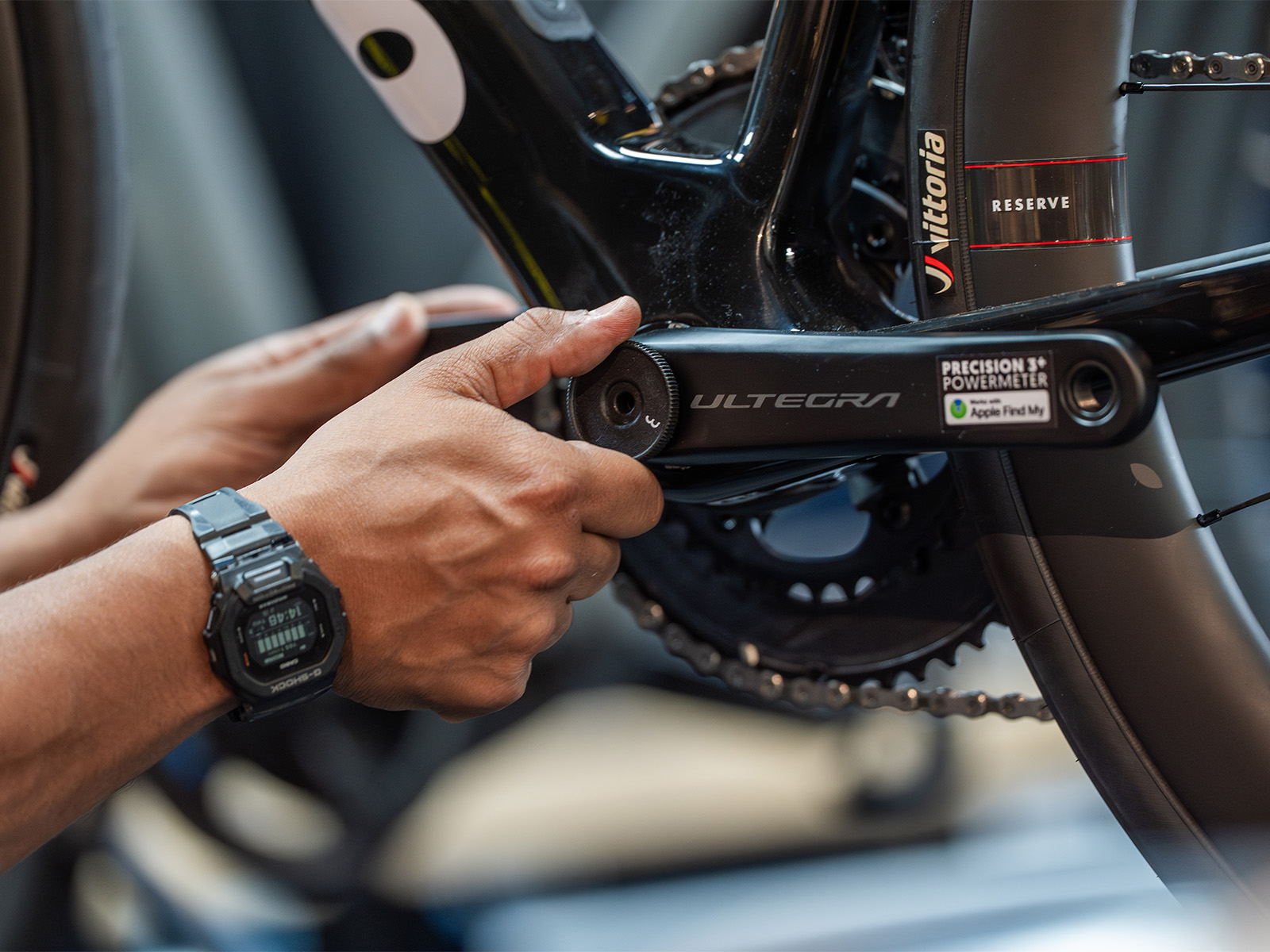
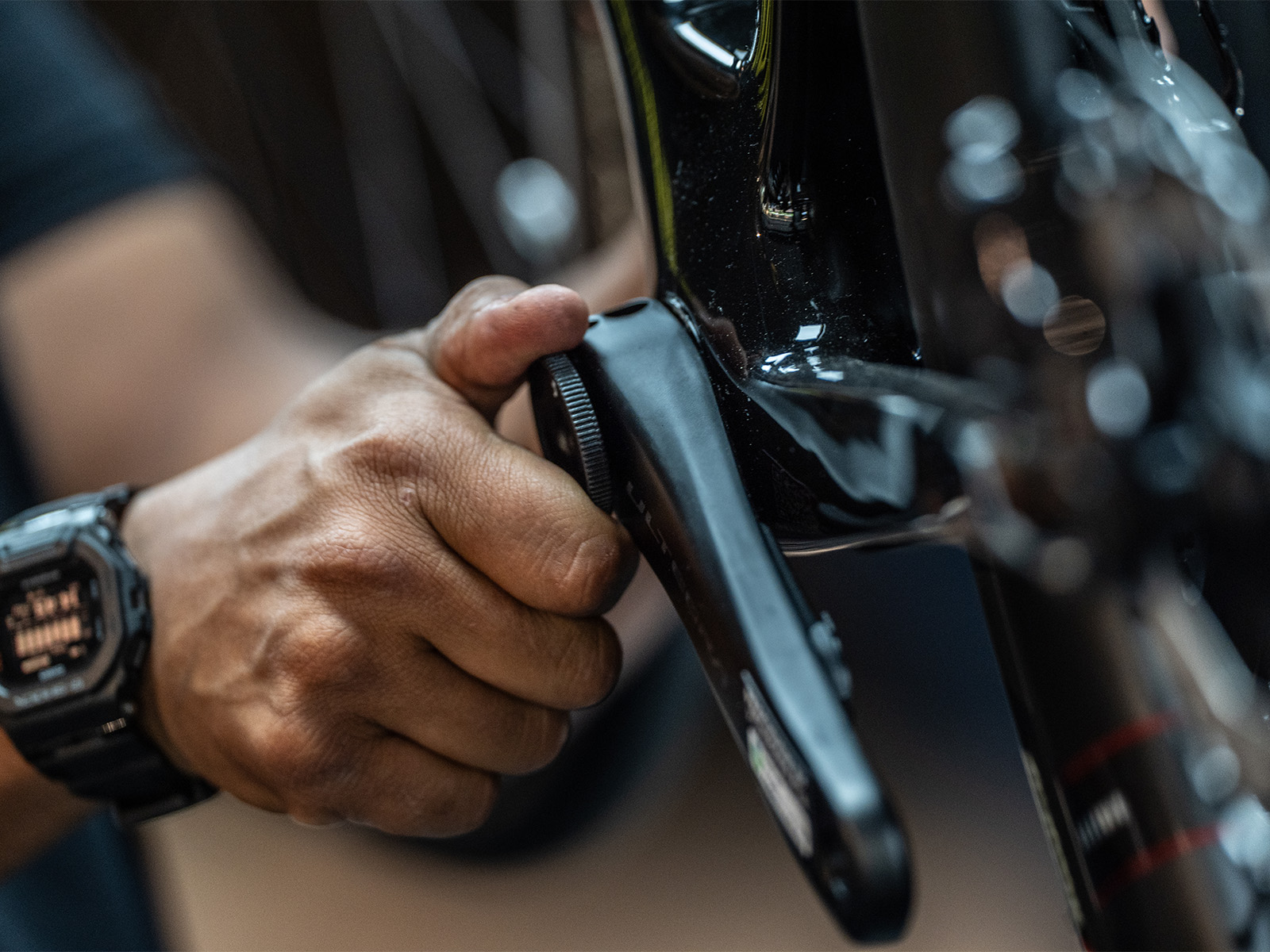
A bottom bracket consists basically of two main variables: the bracket type of your frame and your crank type. By determining these two variables, you will be sure you know which bottom bracket to buy. Start by taking your crank off your bike. Make sure you use the right tools to avoid damage to both your frame and your crankset. Be aware of all the bushings, spacers, and other parts that come off, and make sure you know in which order and direction they come off.
Determine the width of your frame
For all combinations of the frame type and crank type given below, you need to know the width of your frame to determine which bottom bracket you need for your bike as some bottom brackets are available in different sizes. It is one of the easiest measurements that will immediately eliminate a few of the bottom brackets. If you don't understand this yet, no worries, it will all be explained later in this buyer's guide.
All the different bottom bracket types stated below have their own illustration that shows how to measure the width and what measurements match what bottom bracket type. Just read through this buyer's guide, and you will end up with the right bottom bracket for your bike.
Determine the frame bracket type
The second step is to determine what type of bracket your frame has. Below, we will show you the four most common bracket types and how to recognise them.
BSA threaded
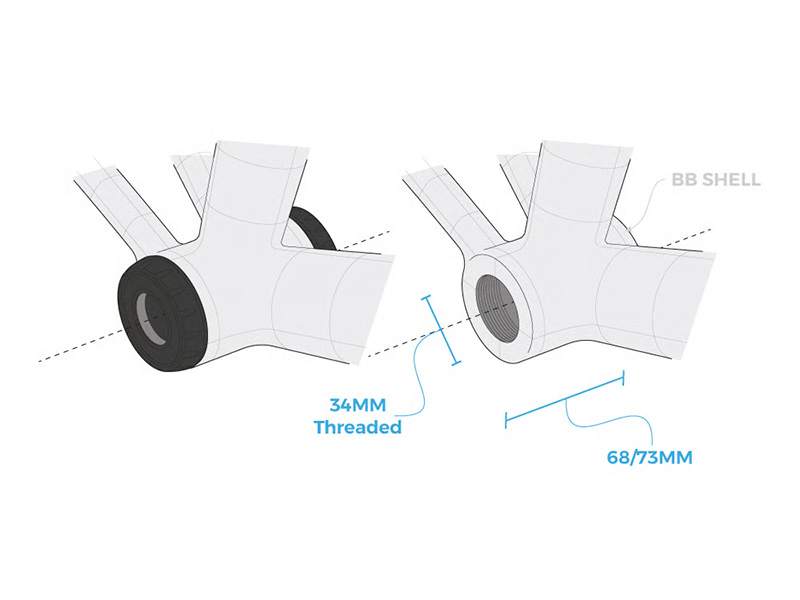
The BSA threaded bottom bracket is probably one of the easiest to recognise, as it has a thread on the inside of the frame in between the bearings. Your frame will also have an integrated thread on the inside where the bottom bracket is screwed on. The inside diameter of the thread is approximately 34 millimeters. If this is what you can recognise on your own frame/bottom bracket, you know that you need one of our BottomThread models, a further explanation of which BottomThread can be found further below in this buyer's guide.
PF86/92
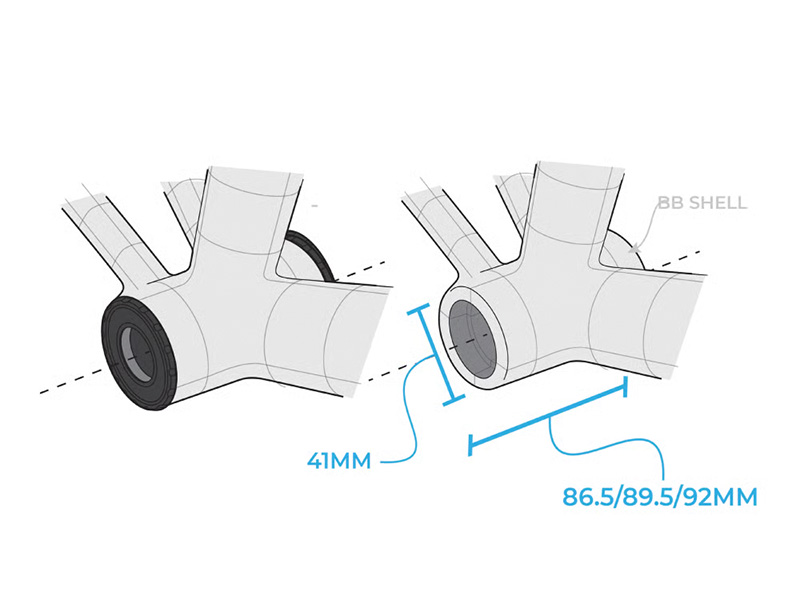
The PF86 and PF92 types are both PressFit type brackets, which means that the bracket is pressed into the frame. They can be recognised by NOT having a thread on the outside and having a very tight fit in your frame. The bearing is pressed into a composite cup, and this combination is then pressed into the frame. This bottom bracket type has, just like the PF30, only a very narrow part of the bottom bracket on the outside of the frame. This immediately shows that you have a PressFit bottom bracket. the PF86/92 can be recognised by an inside diameter of the frame of 41 millimeters. and a width of 86 mm or 92 mm.
BB30
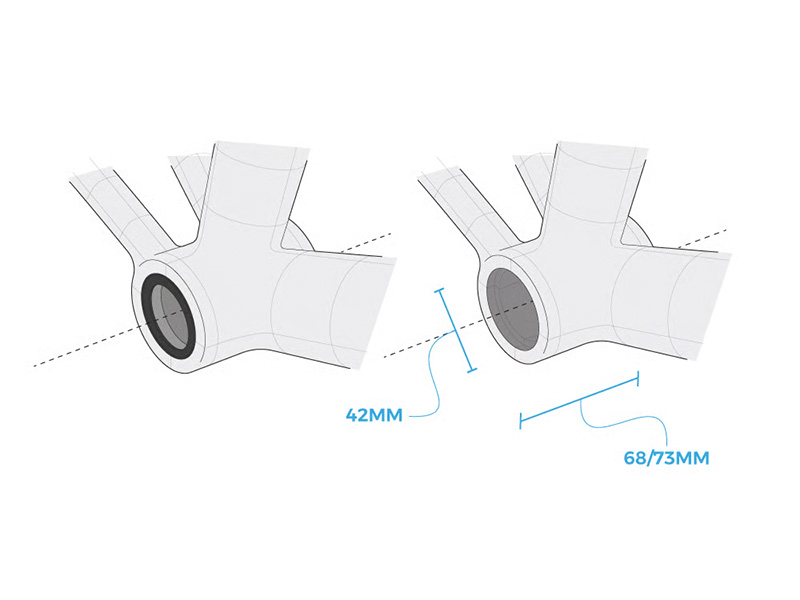
BB30, also called PF42 is a PressFit type bottom bracket and thus has no thread on the outside of the bottom bracket. This type of bottom bracket is also quite easy to recognise as it does NOT have threads and does NOT have removable cups between the bearings and the frame. The bearings are directly pressed into the frame. The inside diameter of the frame is 42 millimeters.
PF30
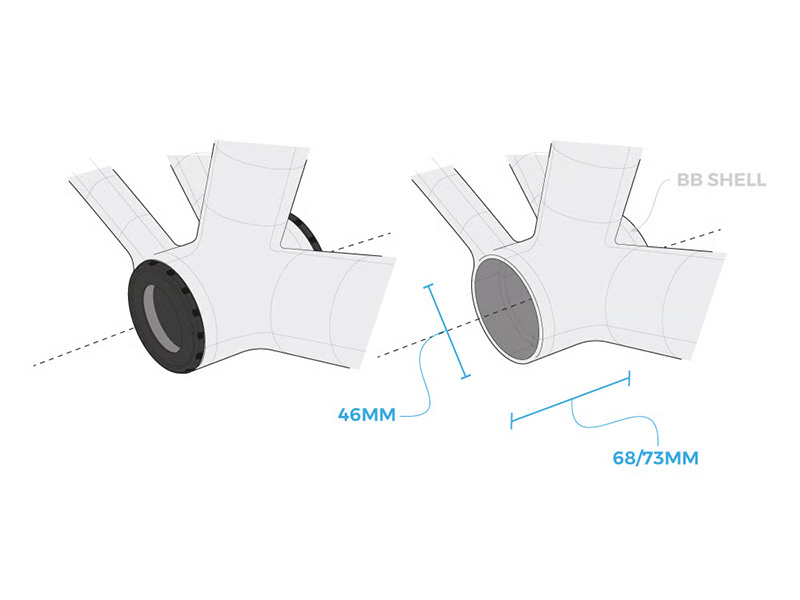
PF30 is also a PressFit type bottom bracket, and thus has no thread on the outside of the bottom bracket. It uses the same bearings as BB30. The only difference is that there is a cup in between the frame and the bearings for battery durability. The inside diameter of the frame is 46 millimetres.
Determine the crank type
Now that you have determined which bottom bracket type your frame is, you have to determine the type of your crankset. The axle (also called spindle) that goes through your frame can have different measurements, and to make sure you get the bottom bracket that fits both your frame and crankset, it is important to know its type. So, grab your crankset, keep reading and find out what type of crankset you have.
Hollowtech II - 24 mm spindle
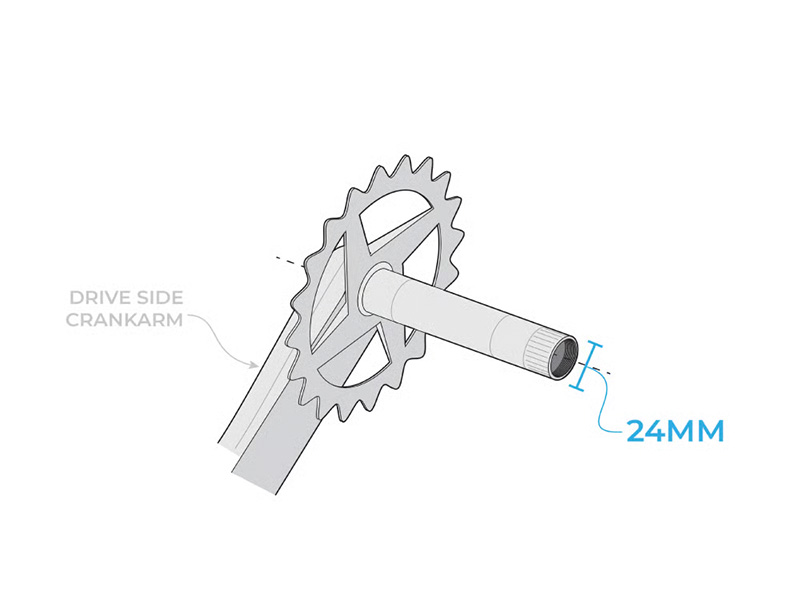
A Hollowtech II crank axle is quite easy to recognise. The outside diameter of the axle must be 24 millimeters along the entire length of the spindle. This standard has the widest frame compatibility on the market and is also the most popular used standard by many brands.
GXP
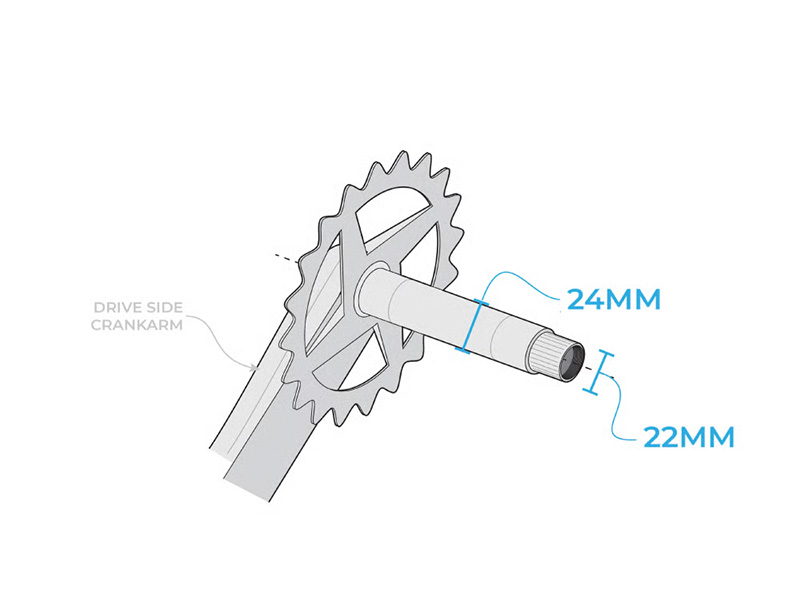
A GXP crank axle is also quite easy to recognise. The outside diameter of the axle is 24 millimetres, just like the Hollowtech II, but it is stepped down to 22 millimetres. This system "Clamps" the entire crankset on the left bearing in the frame, which prevents any form of side play, and less to no spacers are required! In the illustrations above, you will see the difference between a Hollowtech II and a GXP crank axle.
BB30/PF30 - 30 mm spindle
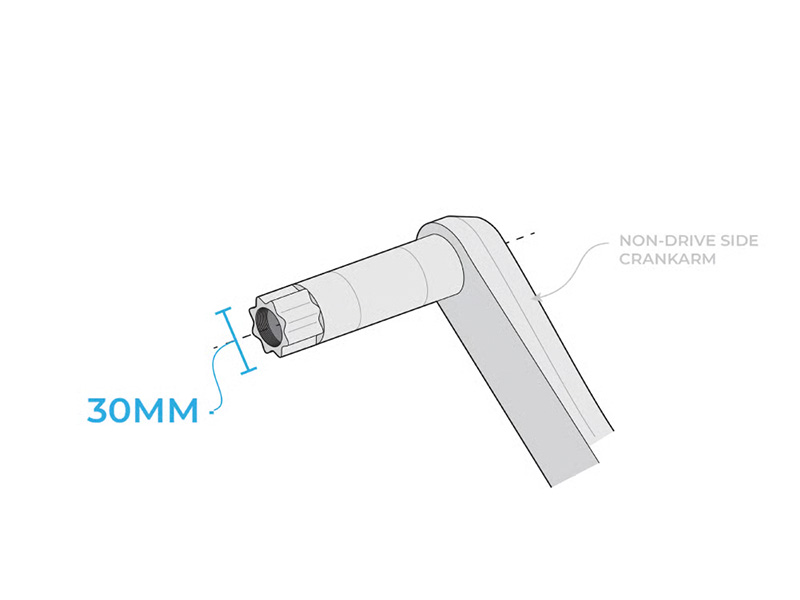
30 mm cranks generally have a stiffer spindle, even though they are made out of aluminium instead of steel. This makes the spindle slightly lighter. An outside diameter of 30mm indicates that you have a PF30/BB30 spindle. Another easy recognition point is the fact that the PF30/BB30 spindle is often attached to the non-drive side. That means that when you take everything apart, the axle is not attached to the side where the chain sits, but it is attached to the other crank.
DUB
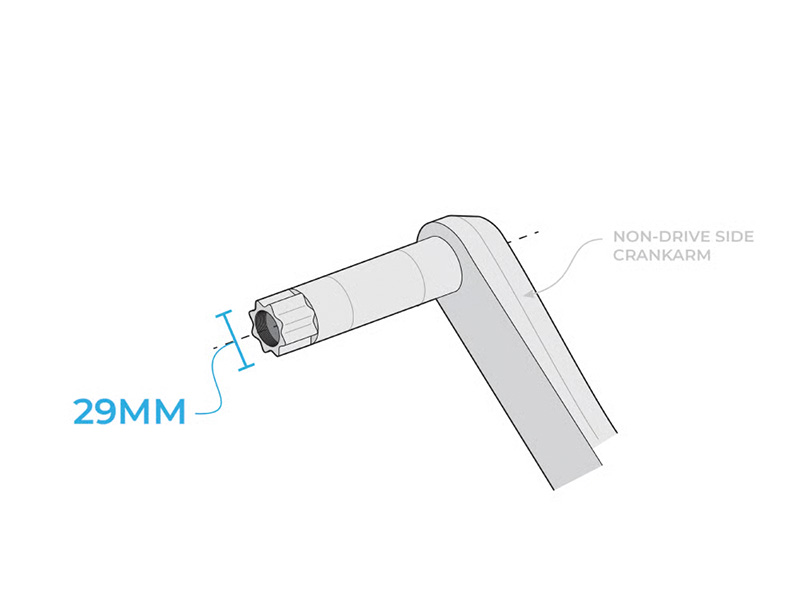
A DUB axle tries to be the best of both worlds, giving a wider frame compatibility with the stiffness of the oversized 30 mm spindles. It has an outside diameter of 29 millimeters (28,99 millimeters to be precise). Besides that, the name DUB is noted on the spindle. Another easy recognition point is the fact that the DUB spindle is always attached to the non-drive side. That means that when you take everything apart, the axle is not attached to the side where the chain sits, but it is attached to the other crank.

You got it!
So, with all this information we hope we have helped you a bit in the big scary world of bottom brackets. It is definitely not an easy subject, and if you are still struggling to work everything out; don't worry, you are not alone! If you are really having a hard time working it all out, just pop in on your local bike shop and they will be happy to help you out. But don't underestimate yourself! We are sure that you can do it with the help of this buyer's guide, read through it another time, and just keep following the steps and you will get there!